The landscape of opportunity in Africa is experiencing a remarkable transformation. Across the continent, sponsorship and funding avenues are growing at an unprecedented rate. From massive international tech grants and corporate business funding to highly lucrative influencer partnerships and specialized NGO educational scholarships, a growing number of global and local organizations are eager to invest heavily in African talent. The capital is there, and the desire to support innovative individuals is stronger than ever.
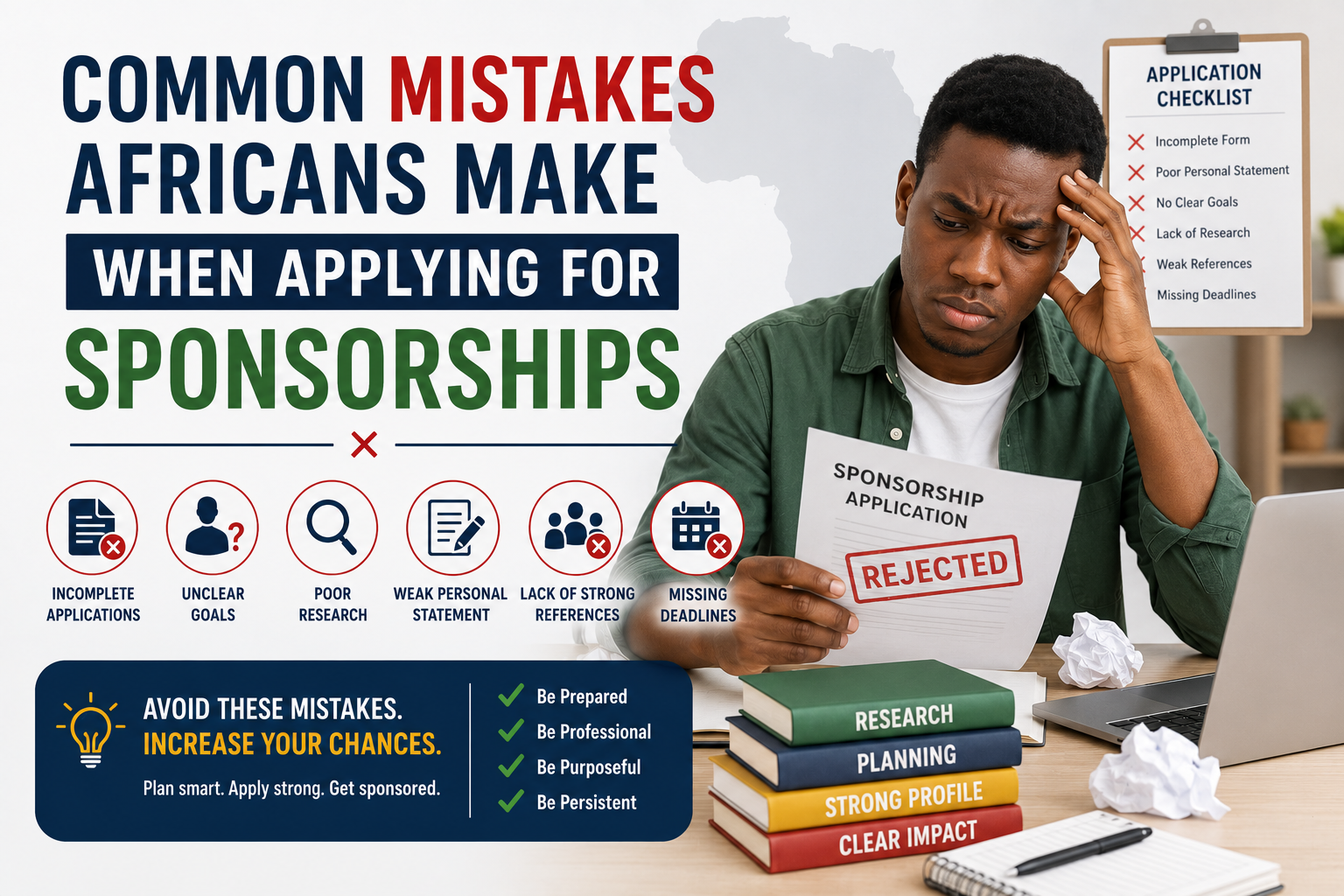
However, a frustrating paradox remains: despite this increasing availability of sponsorships, a massive percentage of applicants continue to face rejection. The heartbreaking reality is that most of these rejections have absolutely nothing to do with a lack of talent, intelligence, or potential. Instead, brilliant individuals are frequently bypassed because they stumble into entirely avoidable traps during the application process.
To succeed in 2026, you must understand that sponsors are not simply looking for “good ideas” or “talented people.” They are looking for clear, mutually beneficial value. They demand professional presentation, crystal-clear communication, undeniable evidence of past impact, and above all, trustworthy individuals they can confidently attach their brand to. A single, easily preventable mistake can make your application stand out for all the wrong reasons—or cause it to be tossed into the rejection pile without a second glance.
This comprehensive guide breaks down the 15 most common mistakes Africans make when applying for sponsorships today, and provides actionable strategies on how to avoid them, ensuring you secure the funding you deserve.
### 1. Applying Without Reading the Eligibility Requirements
One of the most frequent and fatal mistakes applicants make is the “scattergun approach”—rushing to apply for every available opportunity without thoroughly digesting the eligibility criteria. Many hopefuls submit applications for programs where they clearly do not meet the age limit, reside outside the target geographical location, or lack the required academic or professional background.
Sponsors receive thousands of applications. They use these strict requirements as a primary filtering mechanism to separate serious candidates from those who are merely taking a wild guess.
**The Fix:** Treat the guidelines like a legally binding contract. Read them twice. If you do not meet the core criteria, do not waste your time or the sponsor’s time. Focus your energy on opportunities where you are a perfect fit.
### 2. The Trap of the “One-Size-Fits-All” Application
In an attempt to save time, many applicants draft one generic proposal and copy-paste it to dozens of different organizations. This is highly ineffective. Evaluation committees are trained to spot generic, mass-produced applications from a mile away. When your essay feels disconnected from the sponsor’s specific mission, or when your proposal lacks personalized details, it signals laziness.
**The Fix:** A tailored approach is your secret weapon. Customize every single application. Mention the sponsor by name, reference their recent projects, and explicitly state why you are applying to *them* specifically, rather than just anyone with a checkbook.
### 3. Crafting a Weak or Unstructured Personal Statement
Your personal statement or motivation letter is the beating heart of your application. It is your one chance to speak directly to the selection committee. Yet, many applicants write rambling essays that lack a cohesive structure, focus far too much on their own desires rather than their community impact, or fail to clearly articulate what they intend to do with the sponsorship.
**The Fix:** Clarity always beats complexity. Structure your statement logically: Start with a compelling personal story, clearly define your short-term and long-term goals, illustrate the tangible impact you plan to have on others, and strictly connect your personal vision to the overarching goals of the sponsorship.
### 4. Neglecting Your Digital Footprint and Online Presence
We are operating in a deeply digital world. In 2026, you must assume that every serious sponsor will conduct an online background check before writing a check or signing a contract. A weak online presence—characterized by inactive social media accounts, unprofessional posts, inconsistent personal branding, or a total lack of digital evidence regarding your work—can instantly destroy your credibility.
**The Fix:** Curate your digital footprint. Regularly update your LinkedIn profile to reflect your professional milestones. Post content relevant to your industry or field of study. Treat your social media as a living portfolio that showcases your dedication and achievements.
### 5. Failing to Provide Tangible Proof of Impact or Experience
Sponsors are investors, and investors want to mitigate risk. They want to see a track record of execution, not just grand ideas written on paper. Many applications fail because the candidate cannot point to any past work, provides no verifiable metrics, or fails to include testimonials from previous collaborators or community members.
**The Fix:** Even if you are just starting out, you must show momentum. Have you volunteered? Did you organize a small local event? Have you built a prototype? Include links to portfolios, attach data showing business growth, or provide letters of recommendation. Proof of past execution is the strongest predictor of future success.
### 6. Disregarding the Sponsor’s Core Mission and Values
A remarkably common error is focusing entirely on what *you* need, while completely ignoring what the *sponsor* cares about. Every organization has specific corporate goals, target audiences, brand values, and impact strategies. If your proposed project or personal brand does not align seamlessly with their mission, you will be rejected. For example, pitching a purely entertainment-focused music festival to an NGO whose primary mandate is agricultural sustainability will fail, no matter how good the festival idea is.
**The Fix:** Research the sponsor deeply. Understand their “Why.” Your application should clearly position you as the perfect vehicle to help them achieve their own organizational goals.
### 7. Exaggerating Metrics and Misrepresenting Audiences
This mistake is particularly prevalent among content creators, influencers, and startup founders. In a desperate bid to look more appealing, applicants sometimes inflate their follower counts, purchase fake engagement, or misrepresent the demographics of their audience.
Sponsors are sophisticated. They employ advanced analytics tools to audit audiences and verify engagement rates.
**The Fix:** If you are caught lying, you don’t just lose the sponsorship; you permanently destroy your reputation in the industry. Be fiercely honest. Sponsors often prefer a smaller, highly engaged, and authentic audience over a massive, fake one.
### 8. Poor Presentation, Formatting, and Grammar
You could have the most revolutionary idea on the continent, but if your proposal is riddled with spelling mistakes, grammatical errors, and erratic formatting, it will not be taken seriously. Unprofessional presentation implies that you will handle the sponsor’s money and brand reputation with the same level of carelessness.
**The Fix:** First impressions are everything. Use clear headings, bullet points, and professional fonts. Run your application through grammar-checking software, and ideally, have a trusted mentor or colleague proofread your documents before you click submit. Make your proposal clean, structured, and visually effortless to read.
### 9. Failing to Articulate the Return on Investment (ROI)
Many applicants approach sponsorships as if they are applying for charity. They spend pages explaining why they need the money, but fail to answer the most critical question in the sponsor’s mind: *”What do we gain from this partnership?”*
**The Fix:** Remember that sponsorship is a two-way street; it is a business transaction. You must clearly highlight the benefits they will receive. Will you provide them with intense brand exposure to a new demographic? Will you offer them exclusive marketing rights? Will your project significantly boost their corporate social responsibility (CSR) profile? Spell out their ROI clearly.
### 10. Procrastination and Missing Crucial Deadlines
Timing is a critical component of professionalism. Too many applicants wait until the final 48 hours to begin gathering their documents, resulting in rushed, low-quality proposals. Worse still, some attempt to submit applications after the portal has closed, begging for an extension via email.
**The Fix:** Late applications are almost universally ignored. When you find an opportunity, immediately map out a timeline. Request reference letters weeks in advance. Aim to submit your application at least three days before the official deadline to avoid last-minute technical glitches.
### 11. Inability to Follow Basic Instructions
It sounds absurdly simple, yet it is one of the most destructive mistakes you can make. Sponsors will often include specific instructions—such as limiting an essay to exactly 500 words, requiring documents to be submitted only in PDF format, or asking for a specific naming convention for attached files. Ignoring these instructions suggests you are unable to follow basic protocols.
**The Fix:** Treat the instructions as a compliance test. If they ask for a PDF, do not send a Word document. If the limit is 300 words, do not write 305. Exact compliance proves you are detail-oriented and easy to manage.
### 12. The “Submit and Forget” Mentality (Lack of Follow-Up)
A vast majority of people click submit and then passively wait for months. While some highly structured global programs explicitly state “do not contact us,” many local and corporate sponsors actually appreciate proactive communication.
**The Fix:** Following up demonstrates genuine interest, persistence, and professionalism. If the decision date has passed, or if it has been several weeks, send a concise, highly polite email reaffirming your enthusiasm for the opportunity and asking if they require any additional information from your end. Sometimes, a gentle reminder is what brings your file to the top of the stack.
### 13. Falling Victim to Fraudulent Sponsorship Scams
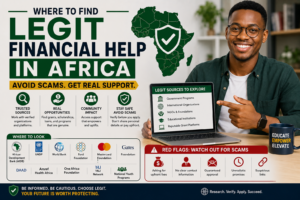
As the legitimate sponsorship market grows, so does the predatory scam market. Desperate applicants are frequently targeted by bad actors offering fake grants.
**The Fix:** Learn to identify the red flags. If an organization asks you to pay an “application fee,” a “processing tax,” or “legal clearance fees” upfront, it is a scam. Real sponsors give money; they do not take it. Furthermore, beware of “guaranteed approval” promises, unverified social media accounts, and communications coming from free email providers (like Gmail or Yahoo) instead of official corporate domains.
### 14. Relying Solely on Public Applications (Weak Networking)
If you only apply to opportunities that are blasted across social media, you are competing against tens of thousands of people. The reality of the corporate world is that a massive percentage of sponsorship deals are secured behind closed doors, through referrals, and via private networks before they are ever announced to the public.
**The Fix:** Build a robust networking strategy. Actively engage with industry leaders on LinkedIn, attend local startup mixers, join relevant professional associations, and participate in online forums. Often, building a relationship with a decision-maker leads to funding opportunities you would never have found via a Google search.
### 15. Giving Up After the First Rejection
Rejection is an unavoidable part of the process. Even the most successful entrepreneurs and scholars have faced dozens of “no’s” before getting a “yes.” Many applicants let their first rejection crush their confidence, causing them to abandon their dreams entirely.
**The Fix:** Understand that rejection is not a reflection of your worth; it is data. Successful applicants use rejection as fuel. If possible, ask for feedback. Use that feedback to refine your proposal, build a stronger profile, and apply again. Persistence is very often the defining characteristic that separates the successful from the unsuccessful.
### Final Thoughts and Your Next Steps
Securing a sponsorship in Africa in 2026 is undoubtedly a highly competitive endeavor, but it is entirely within your reach if you approach the process strategically. Most rejections are not a verdict on your talent; they are the result of poor presentation, weak preparation, a lack of alignment, and simple, avoidable errors.
By shifting your mindset—focusing on absolute clarity, unwavering professionalism, and consistent value creation—your chances of successfully securing funding will increase exponentially.
**Your Action Step for Today:**
Do not just read this guide; act on it. Take a look at the current proposal or application you are working on. Audit it against this list. Identify and fix at least three of the mistakes mentioned above. Refine your digital profile, tailor your essay to the specific sponsor, and ensure your formatting is flawless.
Sponsorship is rarely just about luck or raw talent—it is about rigorous, deliberate preparation. Start preparing properly today.