Across the vast and dynamic landscape of Africa, a silent revolution is taking place. Thousands of ambitious individuals are radically altering the trajectory of their lives, not through mere luck or wealthy family connections, but through the strategic acquisition of high-level sponsorships. We are witnessing an unprecedented flow of funding directed toward advanced education, tech entrepreneurship, creative endeavors, and grassroots social impact projects.
Yet, for many looking from the outside in, the world of sponsorships can feel like an impenetrable fortress. It often seems as though these life-changing opportunities—whether it is a fully-funded international scholarship, a massive corporate brand deal, or a six-figure startup grant—are reserved exclusively for a select, elite few. This is a pervasive and dangerous myth that holds far too many people back.
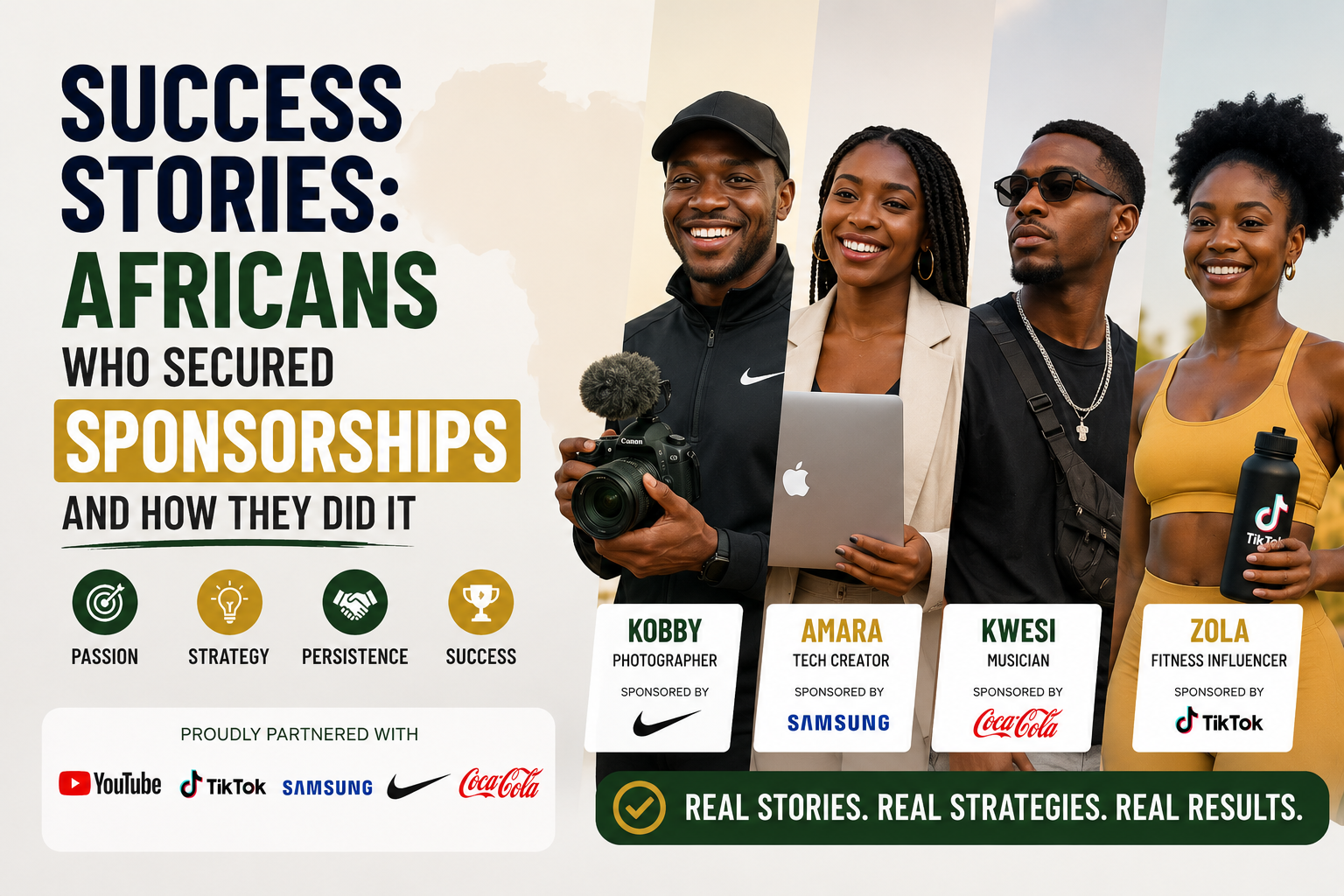
The reality, proven by countless success stories across the continent, is that ordinary Africans armed with extraordinary determination, meticulous strategy, and relentless preparation are breaking down these walls and securing life-changing funding every single day. This comprehensive article delves deep into the inspiring, real-world success stories of Africans who successfully navigated the complex sponsorship landscape. By breaking down exactly how they achieved their goals, we will extract the actionable blueprints you can apply to secure your own funding in 2026.
### The Deep Value of Deconstructing Success Stories
Why should we obsess over success stories instead of just reading abstract lists of advice? The answer lies in the power of reverse engineering. Success stories are critically important because they:
* **Shatter Limiting Beliefs:** They provide undeniable proof that securing massive sponsorships is a highly achievable goal for anyone willing to put in the work, regardless of their background or starting point.
* **Provide Actionable Roadmaps:** They reveal the practical, granular strategies that actually work in the real world, cutting through the noise of theoretical, academic advice.
* **Highlight the Pivot Points:** They show exactly where applicants were failing and what specific, calculated changes they made to finally achieve a breakthrough, helping you avoid those same costly mistakes.
* **Fuel Relentless Persistence:** The journey to sponsorship is almost always paved with rejection. Hearing how others survived the grueling process of hearing “no” multiple times inspires the psychological resilience needed to keep going when things get difficult.
Most importantly, these stories unequivocally prove that securing a sponsorship is not a lottery ticket. It is an exercise in strategic positioning, deep audience understanding, and relentless preparation.
### Case Study 1: The Nigerian Scholar Who Rewrote Her Destiny
**The Struggle:**
A brilliant young student from Lagos, Nigeria, spent an entire year experiencing the crushing weight of relentless rejection. She applied for over fifteen different international Master’s degree scholarships across Europe and North America, and was denied by every single one. She had excellent university grades, but her approach to applying was deeply flawed. She was mass-mailing generic personal statements that sounded exactly like the thousands of other applicants competing against her.
**The Pivot:**
Instead of giving up and accepting defeat, she stepped back and completely dismantled her approach. First, she stopped applying to every random scholarship she found and narrowed her focus exclusively to programs emphasizing sustainable agriculture—a field she was deeply, personally passionate about.
Second, she threw away her generic, robotic personal statement. She spent three entire weeks crafting a deeply personal, compelling narrative, connecting her childhood experiences watching her grandfather’s struggling farm to the modern agricultural and climate crises facing Nigeria today.
Third, and perhaps most crucially, she realized she needed proof of her commitment beyond just her grades. While waiting for the next application cycle, she started a small, unpaid weekend initiative teaching sustainable urban farming techniques to women in her local community. She meticulously documented this work. Finally, she applied weeks ahead of the deadline, ensuring every document was flawlessly formatted and tailored perfectly to the specific university’s mandate.
**The Result:**
Her revamped, highly strategic application caught the immediate attention of the selection committee. Because she had a clear narrative and proof of execution, she was ultimately awarded a fully-funded, highly prestigious scholarship supported by the Mastercard Foundation, covering her full tuition, living stipends, and all international travel.
**The Core Lesson:** 👉 Consistency and continuous, analytical improvement matter exponentially more than early success. A focused, narrative-driven application backed by real-world community action will always defeat a generic application relying solely on perfect grades.
### Case Study 2: The Nairobi Tech Founder Who Built Over Pitching
**The Struggle:**
In the bustling tech hub of Nairobi, Kenya, a young, self-taught developer identified a massive problem with the local informal transport sector (known locally as matatus). He wrote a brilliant, highly detailed pitch deck for an app designed to optimize transport routes, reduce wait times, and cut carbon emissions. However, for six grueling months, he pitched his idea to local angel investors and international tech grant programs, only to be met with polite dismissals. Investors, he realized, were deeply fatigued by funding “brilliant ideas on paper.”
**The Pivot:**
He realized that talk is cheap, especially in the highly competitive tech startup world. He stopped pitching to investors and started building the product. Working late into the night, he coded a highly simplified, bare-bones version of his app—a Minimum Viable Product (MVP). He didn’t wait for aesthetic perfection; he simply got the core functionality working.
He then went to the streets and convinced just three local matatu drivers to use the app for one month. He gathered actual, irrefutable data on how the app improved their daily income and reduced their fuel costs. Armed with a working prototype and real-world user metrics, he completely changed his strategy. He applied to a rigorous tech accelerator program, rewriting his pitch deck to shift the focus from “Look at my brilliant idea” to “Look at this measurable, financial impact I have already created on the ground.”
**The Result:**
His transition from being an “idea guy” to an “execution guy” changed everything. He was accepted into a highly competitive, globally recognized startup support program managed by Google for Startups. He received not just critical seed funding, but also invaluable executive mentorship, structural support, and vital cloud computing credits.
**The Core Lesson:** 👉 Execution is the ultimate currency. Clear, demonstrated problem-solving backed by a functional prototype will attract massive funding much faster than the most beautifully designed, theoretical pitch deck.
### Case Study 3: The South African Influencer Who Ignored the Follower Count
**The Struggle:**
A passionate fashion and lifestyle content creator based in Johannesburg, South Africa, felt utterly defeated by the algorithm. She had a highly curated, beautiful Instagram feed but was stuck at roughly 4,500 followers. She constantly watched creators with over 100,000 followers secure lucrative brand deals, assuming that she needed a massive, viral audience before any corporate brand would ever take her seriously.
**The Pivot:**
She made a radical decision to stop obsessing over her total follower count and entirely shift her focus to community depth. She stopped trying to appeal to everyone on the internet and carved out a highly specific, under-served niche: affordable, thrifted corporate wear for young African professionals entering the workforce.
She began writing long, vulnerable, storytelling captions detailing the financial struggles of looking professional on an entry-level salary. She spent two hours every single day actively replying to every comment and direct message she received. Because her audience felt deeply seen and understood, her engagement rate skyrocketed to an unheard-of 12%. Recognizing her true value, she built a sleek, professional media kit highlighting this massive engagement rate and her highly specific audience demographics, rather than her overall follower count.
**The Result:**
She began proactively cold-pitching local fashion boutiques, offering high-conversion sales rates rather than just vague brand awareness. Her localized success quickly caught the attention of larger retail chains. Within eight months, despite still having under 10,000 followers, she secured long-term, paid sponsorship contracts with major national brands who valued her deeply trusting, highly converting audience over empty vanity metrics.
**The Core Lesson:** 👉 Depth of engagement and absolute consistency are far more valuable to modern brands than a superficial follower count. A small, fiercely loyal community is a highly monetizable and incredibly powerful asset.
### Case Study 4: The Accra Social Entrepreneur Who Mastered the Proposal
**The Struggle:**
A visionary young woman in Accra, Ghana, started a grassroots initiative aiming to train unemployed, marginalized youth in highly demanded digital skills like coding and digital marketing. She was running the program out of a borrowed church hall on weekends and desperately needed funding to purchase laptops and reliable internet access. She sent dozens of passionate, emotional emails to wealthy individuals and local businesses begging for support, but received almost nothing in return.
**The Pivot:**
She quickly realized that passion does not equal professionalism in the eyes of institutional donors. She took a free, intensive online course on grant writing and completely restructured her entire approach.
Instead of vague requests for money, she clearly defined her project’s Key Performance Indicators (KPIs). She detailed exactly how much it cost to train one single student and exactly how she would measure their success in the job market post-training. To prove she had genuine grassroots trust, she collected official letters of support from local community leaders and religious figures. She then actively searched for NGOs whose specific, stated mandate aligned precisely with youth tech empowerment, and she submitted a highly structured, data-driven funding proposal.
**The Result:**
Her professional, meticulously detailed approach paid off spectacularly. Her proposal was reviewed and fully approved by a massive development-focused organization backed by the United Nations Development Programme (UNDP). She received a grant large enough to secure a permanent training facility, hire part-time instructors, and purchase all necessary technical equipment.
**The Core Lesson:** 👉 NGOs and development agencies do not fund vague, passionate pleas. They fund structured, impact-driven projects with clear metrics, transparent budgets, and heavily aligned social goals.
### Case Study 5: The Nigerian Visual Artist Who Built a Global Footprint
**The Struggle:**
A phenomenally talented fine-art photographer in Lagos had a hard drive full of breathtaking, culturally significant imagery, yet he was struggling immensely to monetize his art. He relied entirely on hoping people would stumble across his Instagram page and hire him for local events or weddings, which barely paid his basic living expenses.
**The Pivot:**
He recognized that while his art was undeniably world-class, his marketing strategy was completely invisible. He radically changed his visibility strategy. While he kept his Instagram active as a visual portfolio, he aggressively transitioned to LinkedIn to network directly with corporate art directors, advertising executives, and global marketing managers.
He stopped just posting his final images. Instead, he started posting compelling “behind-the-scenes” videos detailing his intense creative process, the deep cultural history behind his shoots, and the technical lighting challenges he overcame. He began actively tagging and collaborating with other prominent African creatives, essentially forcing his work into new algorithms and in front of new audiences. He transformed from a silent, starving artist into a vocal, recognizable personal brand.
**The Result:**
His strategic, cross-platform visibility campaign worked flawlessly. By showcasing his creative intellect alongside his raw visual talent, international brands seeking authentic African visual storytelling began reaching out to him directly. He bypassed local, low-paying shoots entirely and landed massive, high-paying sponsored campaigns for global technology and fashion brands who wanted his unique cultural perspective.
**The Core Lesson:** 👉 Incredible talent in a vacuum is useless. Strategic visibility, networking aggressively on corporate platforms like LinkedIn, and showcasing the brilliant mind behind the art is what creates highly lucrative global opportunities.
### The Universal Blueprint: Common Patterns Across All Success Stories
While the extraordinary individuals in these stories come from vastly different countries and operate in completely different industries, their ultimate paths to success are strikingly similar. If you analyze their journeys closely, five undeniable patterns emerge:
1. **Laser-Focused Direction:** Not a single one of these individuals succeeded by throwing random applications at the wall to see what stuck. They defined a highly specific goal and pursued it relentlessly.
2. **Unwavering Consistency:** None of these success stories happened overnight. They all faced a grueling period of rejection, silence, and deep frustration. They succeeded because they categorically refused to quit when the process became difficult.
3. **Impeccable Personal Branding:** They realized that sponsors are investing in the person just as much as the idea. They positioned themselves as serious, reliable, and articulate professionals across all digital platforms.
4. **Undeniable Proof of Value:** They did not ask sponsors to take a blind leap of faith. They built prototypes, ran unpaid pilot programs, fostered engaged communities, and generated real-world data to definitively prove their concept worked.
5. **Strategic, Sniper-Like Applications:** They stopped applying randomly. They thoroughly researched their targets and only applied to opportunities where their specific project aligned perfectly with the sponsor’s overarching mission and corporate values.
### The Graveyard of Dreams: What Most People Do Wrong
To truly understand how to win, you must understand exactly why the vast majority of Africans fail to secure sponsorships. The most common, career-killing mistakes include:
* **Applying Without Rigorous Preparation:** Submitting messy first drafts, ignoring obvious typos, and failing to research the history of the sponsoring organization.
* **The “Copy-Paste” Syndrome:** Using the exact same generic, robotic application for ten different opportunities, failing entirely to tailor the narrative to the specific reader.
* **A Lack of Tangible Goals:** Asking for “money to support my dream” instead of “funding to execute this specific, measurable project.”
* **A Ghost-Town Digital Presence:** Having zero online footprint, making it virtually impossible for a cautious sponsor to verify their credibility or past work.
* **Premature Surrender:** Giving up entirely after the first three rejection emails, completely misunderstanding that rejection is a standard, unavoidable part of the process.
These easily avoidable, administrative mistakes are vastly more common reasons for rejection than a genuine lack of talent or capability.
### Your 2026 Actionable Roadmap
If you are determined to secure a life-changing sponsorship in 2026, you must stop operating on hope and start operating on strategy. Here is your immediate, actionable focus:
1. **Define Your Singular Goal:** Absolute clarity is power. Decide exactly what you need funding for right now. Is it a Master’s degree in Public Health? Seed funding for an Agri-tech startup? Or long-term brand deals for your fitness channel? Pick one and commit.
2. **Audit and Rebuild Your Profile:** Google your own name right now. What does a potential sponsor see? You must build a digital profile that radiates competence. Update your LinkedIn, build a simple digital portfolio, and ensure your social media reflects your professional ambitions.
3. **Manufacture Your Own Proof of Work:** Do not wait for funding to start doing the work. If you want a scholarship, start volunteering today. If you want startup funding, build a free, basic version of your app. Create tangible, undeniable evidence that you are a person of action.
4. **Execute Strategic Outreach:** Curate a specific list of five highly relevant sponsors. Study their past grantees, understand their current corporate goals, and write customized, highly targeted applications just for them.
5. **Build a Callous to Rejection:** Accept right now that you will likely be rejected multiple times. Commit to the grueling process of applying, analyzing the rejection, improving your pitch, and applying again with greater strength.
### The Essential Role of Major Sponsorship Programs
It is critically important to recognize the massive institutional ecosystem supporting these dreams. Many of the most profound success stories in Africa today are directly tied to massive, forward-thinking global programs. Initiatives like the Mastercard Foundation’s educational scholarships, Google for Startups’ massive funding rounds, and the United Nations Development Programme’s social impact grants are aggressively seeking out African talent. These organizations firmly believe in the future of African innovation, and they possess the capital to back it up. They are looking for you—you just have to prove to them that you are ready for the investment.
### Final Thoughts
The inspiring success stories of Africans securing monumental sponsorships prove one incredibly powerful truth: the opportunity is absolutely real, but the preparation must be exceptional.
Whether we are looking at a brilliant student finally winning a global scholarship, a resilient tech founder securing critical startup capital, or a creative visionary landing massive international brand deals, the foundation of their success is identical. Their journeys were not built on luck; they were meticulously built on absolute clarity, unwavering consistency, brilliant strategy, and a stubborn, unrelenting refusal to surrender.
If a young student in Lagos, a developer in Nairobi, or an influencer in Johannesburg can completely rewrite their life story through strategic sponsorship, there is absolutely no valid reason you cannot do the exact same thing in 2026.
### Your Immediate Action Step
Do not just close this article and move on to the next distraction. Start your journey today:
1. **Identify** your exact, singular sponsorship goal (Education, Business, or Creative).
2. **Analyze** the one success story in this article that most closely mirrors your specific ambition and reverse-engineer their pivot.
3. **Execute** one tangible action step before you go to sleep tonight—whether that is drafting a completely new personal statement, building a professional media kit, or reaching out to a local community leader to start a small, collaborative project.
Your name could very well be the subject of the next great African success story. That story does not begin when you get the funding; it begins with the precise actions you choose to take today.