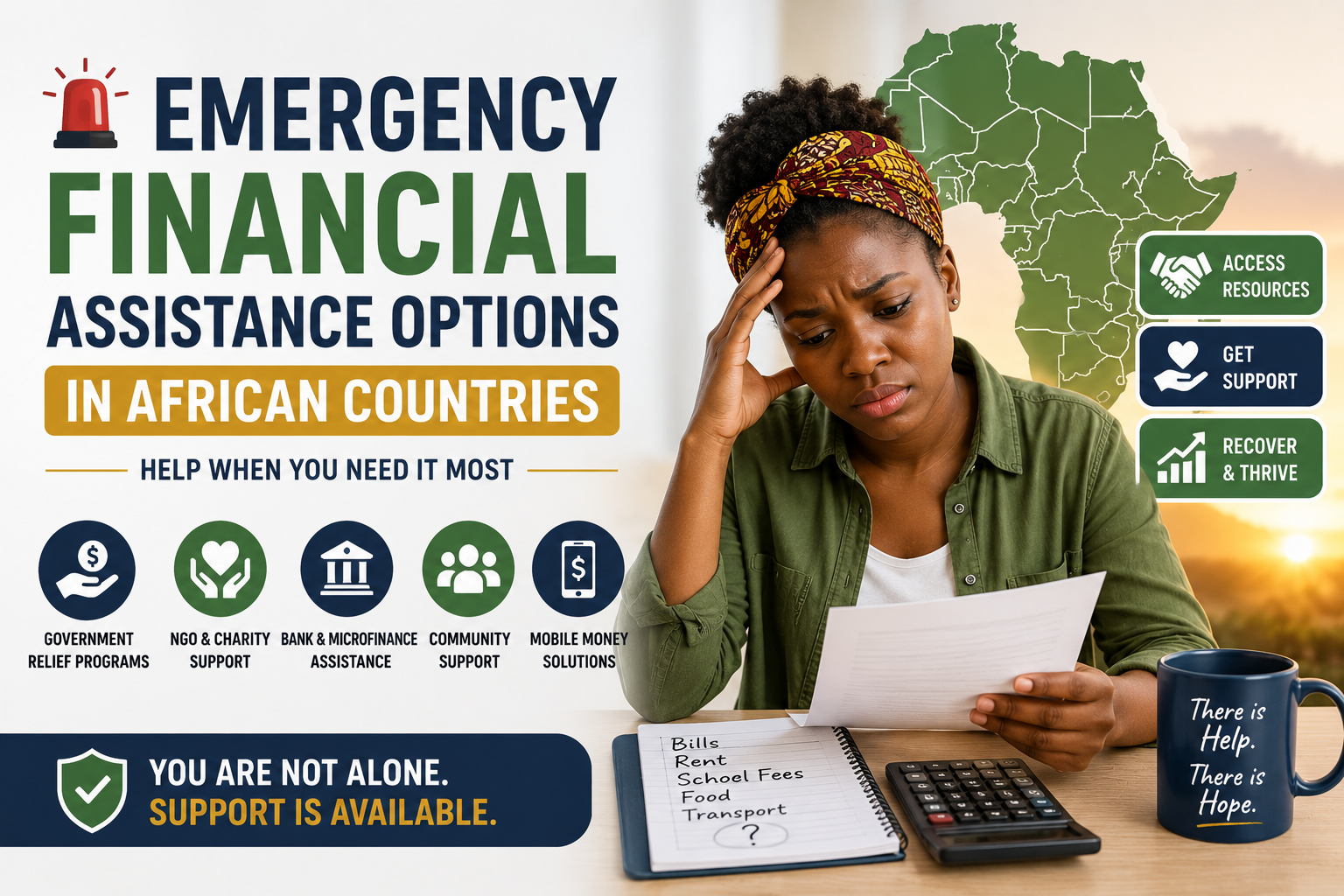
Life is inherently unpredictable. In the blink of an eye, circumstances can shift dramatically. A sudden medical emergency, an unexpected job loss, the collapse of a small business, or unforeseen family responsibilities can plunge individuals and entire households into severe financial distress. For many across the African continent, these unexpected shocks can be devastating, threatening not just financial stability but also basic survival. In these critical moments, knowing exactly where to turn for emergency financial assistance is not just helpful—it can be a lifesaver.
Across Africa, a diverse ecosystem of support exists. Governments, non-governmental organizations (NGOs), international humanitarian bodies, and grassroots community programs are continuously working to provide vital emergency relief for those facing urgent economic hardships. Despite the availability of these resources, a significant challenge remains: a vast majority of people are either entirely unaware of these lifelines or find the process of accessing them too complex and daunting.
This comprehensive guide is designed to bridge that information gap. It explores the myriad of emergency financial assistance options available across African nations in 2026, details the eligibility criteria for these programs, and provides actionable, step-by-step advice on how to apply safely and effectively.
### Understanding Emergency Financial Assistance
Before diving into the specific avenues of support, it is crucial to understand what emergency financial assistance actually entails. At its core, emergency aid is short-term financial or material support provided to individuals, families, or communities experiencing sudden, urgent, and unexpected hardship.
This type of assistance can manifest in several different forms, including:
* **Direct Cash Transfers:** Immediate funds deposited to bank accounts or mobile money wallets to cover essential needs.
* **Medical Funding:** Financial support to cover emergency surgeries, life-saving medications, or extended hospital stays.
* **Food and Nutritional Assistance:** Rations, food vouchers, or subsidized meals to prevent malnutrition and starvation during crises.
* **Housing and Shelter Support:** Temporary accommodation for those displaced by disasters or facing immediate eviction.
* **Small Relief Grants:** Modest financial injections to help rebuild small enterprises or replace essential tools of trade lost to disasters.
It is important to differentiate this from other financial products. Unlike long-term business loans, mortgages, or educational scholarships, emergency aid is specifically designed for immediate relief. It is not meant to be a permanent solution, but rather a bridge to help you survive a crisis and stabilize your situation.
### 1. Government-Led Emergency Support Programs
In recent years, many African governments have significantly strengthened their social welfare frameworks to provide a safety net for their citizens during times of acute distress. These government-backed emergency assistance programs are typically managed through national ministries of social development, social welfare, or dedicated emergency management agencies.
The types of support offered by governments generally include:
* **Unemployment Relief:** Short-term financial aid for individuals who have suddenly lost formal employment, often designed to cover basic living expenses while they search for new opportunities.
* **Disaster Recovery Funds:** Financial and material support mobilized in the aftermath of natural disasters such as severe floods, prolonged droughts, or destructive storms.
* **State Medical Assistance:** Subsidized healthcare or complete waivers for emergency medical treatments at public health facilities.
* **Emergency Cash Transfers:** Rapid deployment of funds to severely impoverished households during localized economic shocks.
These programs are usually activated during significant life events like sudden job loss, severe personal illness, extreme poverty, or large-scale national disasters.
### 2. Structured Social Protection and Cash Transfer Initiatives
Beyond immediate emergency responses, several countries in Africa have developed robust, structured social protection systems. These are ongoing programs designed to catch those who are chronically vulnerable before they fall into absolute destitution, but they also act as a buffer during sudden emergencies.
These initiatives specifically target:
* Ultra-low-income and marginalized families.
* Elderly citizens who lack pensions or familial support.
* Individuals living with severe physical or mental disabilities.
* Vulnerable households, particularly those headed by children or single parents.
The benefits provided under these structured systems often include monthly cash stipends, subsidies for essential food items, and financial support to ensure children remain in school despite household financial crises. By maintaining these programs, governments aim to steadily reduce overall poverty rates and build resilience within vulnerable populations against future shocks.
### 3. The Crucial Role of Non-Governmental Organizations (NGOs)
When government resources are stretched thin or bureaucratic processes slow down the delivery of aid, Non-Governmental Organizations (NGOs) frequently step into the breach. NGOs play a monumental role in the emergency relief landscape across the African continent, often operating with greater agility and reaching remote or marginalized communities more effectively.
NGOs typically focus their support on:
* **Emergency Food Distribution:** Setting up feeding centers or distributing food parcels in areas hit by sudden famine or economic collapse.
* **Emergency Shelter:** Providing tents, temporary housing materials, and safe spaces for people displaced by conflict or natural disasters.
* **Crisis Healthcare:** Operating mobile clinics, providing emergency trauma care, and distributing essential medicines in areas where public health infrastructure has failed.
* **WASH (Water, Sanitation, and Hygiene):** Ensuring access to clean drinking water to prevent the outbreak of diseases during emergencies.
The NGO sector is incredibly diverse, ranging from small, community-based local organizations that understand the specific nuances of their neighborhoods, to massive international humanitarian groups and deeply rooted faith-based organizations. Their ability to respond rapidly makes them indispensable during crises like localized flooding, regional conflicts, or sudden health epidemics.
### 4. Global Humanitarian and International Relief Organizations
On a macro level, global organizations provide critical financial backing, logistical expertise, and direct humanitarian assistance across Africa. These entities usually step in during large-scale emergencies that overwhelm national capacities.
Prominent examples of these support providers include:
* **The United Nations Development Programme (UNDP):** Focuses on recovery and building resilience after a crisis has passed.
* **The World Food Programme (WFP):** The leading organization delivering food assistance in emergencies and working with communities to improve nutrition and build resilience.
* **UNICEF:** Dedicated specifically to the protection, survival, and development of children facing emergencies.
These colossal organizations offer massive logistical support, including emergency food aid on a national scale, widespread cash assistance programs, comprehensive healthcare support, and multi-million dollar disaster recovery funding. They rarely work alone; instead, they partner closely with national governments and local NGOs to ensure aid is delivered efficiently and reaches those most in need.
### 5. Dedicated National Disaster Relief Funds
In response to the increasing frequency of extreme weather events, many African nations have established dedicated national disaster relief funds. These are specialized financial reserves set aside specifically to respond to sudden, widespread emergencies.
These funds are typically unlocked to cover:
* Catastrophic flooding that displaces communities.
* Severe agricultural droughts threatening national food security.
* Widespread fires destroying residential or commercial areas.
* Outbreaks of infectious diseases or epidemics.
When activated, these funds are used to swiftly provide temporary housing, emergency cash disbursements, massive food supply chains, and deployment of emergency medical teams.
### 6. Navigating Health Emergency Assistance
Medical emergencies are universally recognized as one of the most common catalysts for sudden financial ruin. The exorbitant costs of unexpected surgeries, specialized treatments, or prolonged hospitalization can deplete a family’s savings overnight.
To mitigate this, several avenues of support exist:
* **Government Hospital Subsidies:** Many public hospitals have sliding scale fees or waivers for patients who can prove severe financial hardship.
* **National Emergency Health Insurance:** Some countries are rolling out universal health coverage schemes that include provisions for emergency treatments regardless of immediate ability to pay.
* **NGO Medical Funds:** Specific charities focus entirely on funding life-saving surgeries or treatments for impoverished individuals.
Furthermore, many larger public and private hospitals employ social workers within dedicated social welfare units. These professionals are tasked with assisting low-income patients in navigating the financial aspects of their care and connecting them with external funding sources.
### 7. Grassroots, Community, and Faith-Based Support Systems
The cultural philosophy of Ubuntu—”I am because we are”—remains profoundly strong across Africa. In times of crisis, local communities frequently serve as the first and most accessible line of defense.
Grassroots support networks include:
* **Community Fundraising (Crowdfunding):** Neighbors and community members pooling resources to help a family in distress.
* **Religious Organizations:** Churches, mosques, and temples frequently maintain emergency funds, food pantries, and shelter options for their congregations and the wider community.
* **Local Cooperative Societies (Stokvels/Ajo):** Traditional savings clubs that often have provisions for emergency payouts to members facing sudden hardship.
These community-based systems are invaluable because they are built on high trust, require minimal bureaucracy, and provide aid almost instantaneously.
### 8. Specialized Support for Youth and Women
Recognizing that certain demographics are disproportionately affected by economic shocks, numerous programs are tailored specifically for vulnerable groups, particularly youth and women.
These targeted programs often provide:
* **Emergency Business Grants:** Small cash injections to help female entrepreneurs or young business owners keep their micro-enterprises afloat during a crisis.
* **Job Placement and Retraining:** Immediate assistance for youth who have lost their income, helping them pivot to more stable industries.
* **Livelihood Support:** Providing tools, seeds, or sewing machines to help individuals restart their income-generating activities after a disaster.
### 9. Microfinance as an Emergency Buffer
While traditionally focused on business development, many microfinance institutions (MFIs) have recognized the need for emergency liquidity and now offer specific emergency loan products.
The features of these loans typically include:
* Extremely rapid approval and disbursement processes (sometimes within 24 hours).
* Relatively small loan amounts tailored to cover immediate necessities.
* Short repayment periods.
*Cautionary Note:* While microfinance can be a vital lifeline when cash is needed immediately, it must be approached with caution. The interest rates on emergency loans can be significantly higher than standard loans, and defaulting can lead to a deeper cycle of debt.
### 10. Employer and Workplace Assistance
For those in the formal employment sector, the workplace itself can be a source of emergency assistance. Progressive employers increasingly recognize that a financially stressed employee is an unproductive one.
Workplace support can take the form of:
* **Salary Advances:** Allowing employees to draw on their future earnings to cover immediate, unexpected costs.
* **Medical Emergency Support:** Corporate health policies that cover sudden, severe illnesses not fully covered by standard insurance.
* **Hardship Grants:** Non-repayable grants offered by the company or an employee-funded pool to assist colleagues facing catastrophic life events.
### A Step-by-Step Guide to Applying for Assistance
The landscape of emergency aid is vast, and applying for help can feel overwhelming when you are already under stress. Following a structured approach can significantly increase your chances of success.
**Step 1: Accurately Identify the Right Program**
Do not waste precious time applying for aid that doesn’t match your situation. Categorize your crisis: Is it a medical emergency? Have you run out of food? Did you lose your job? Were you impacted by a flood? Target the organizations specifically funded to handle your exact type of emergency.
**Step 2: Gather All Necessary Documentation**
Bureaucracy is unavoidable, even in emergencies. Anticipate what will be asked of you and gather it beforehand. Common requirements include:
* Valid National ID, Passport, or Voter’s Card.
* Proof of residence (utility bills or a letter from a local community leader).
* Official medical reports and bills (if applying for health assistance).
* Proof of recent job loss or income statements.
**Step 3: Apply Exclusively Through Official Channels**
This is critical for your safety. Only submit applications through official government ministry offices, verified and secure NGO websites, or authorized local community leaders. Never use unverified third-party brokers.
**Step 4: Ensure a Flawless Application Submission**
Take the time to ensure your application is comprehensive. Double-check that it is completely filled out, entirely accurate, and cleanly written. Ambiguity or missing information is the fastest way to get an application delayed or rejected.
**Step 5: Proactive Follow-Up**
Once submitted, do not just wait passively. Keep a record of your application numbers and check your status regularly. If the organization requests additional information, respond immediately.
### Protecting Yourself from Scams and Fraud
It is a tragic reality that scammers actively prey on desperate people during emergencies. When you are panicked, you are more likely to make poor decisions. You must remain vigilant.
**Major Warning Signs of a Scam:**
* **Requests for Upfront Payment:** Legitimate emergency aid providers will *never* ask you to pay a “processing fee,” “registration fee,” or “tax” to receive a grant. If they ask for money, it is a scam.
* **”Guaranteed Approval” Promises:** No legitimate organization can guarantee aid before reviewing your case.
* **Unofficial Communication:** Be incredibly wary of applications processed entirely over WhatsApp, Telegram, or via free email accounts (like Gmail or Yahoo) claiming to be government officials.
* **Phishing Links:** Fake websites designed to look like government portals aimed at stealing your identity and banking details.
### Strategies to Maximize Your Chances of Receiving Help
1. **Maintain Absolute Honesty:** Provide a truthful, unembellished account of your situation. Fraudulent claims not only get rejected but can result in legal action or being blacklisted from future aid.
2. **Act with Urgency:** Emergency funds are almost always limited. Apply the moment you realize you are in a crisis; do not wait until the situation is catastrophic.
3. **Trust Only Official Sources:** Rely on verified platforms and recognized community leaders.
4. **Stay Organized:** Having your documents neatly prepared demonstrates responsibility and speeds up the administrative process for aid workers.
5. **Leverage Local Knowledge:** Speak to your community leaders, religious figures, or local ward councilors. They often possess unadvertised knowledge about available grassroots resources.
### Final Thoughts
Navigating a financial crisis is an incredibly stressful experience, but it is important to remember that you do not have to face it alone. Emergency financial assistance in African countries plays an absolutely vital role in stabilizing individuals and families during their darkest hours. Whether the support comes from national governments, dedicated NGOs, massive international organizations, or the kindness of your local community, help is out there—provided you know exactly where to look and how to ask for it.
Organizations such as the World Food Programme, UNICEF, and various local charities continue to pour resources into the continent to provide this critical safety net.
The most important takeaway is this: When a crisis strikes, do not let panic paralyze you. Act quickly, rely strictly on verified and official sources, protect yourself from predatory scams, and reach out for the help you deserve.
### Your Immediate Action Step
If you, a family member, or someone in your community is currently facing a sudden financial emergency:
1. **Identify** a legitimate, relevant support program in your specific country today.
2. **Gather** your identification and supporting documents immediately.
3. **Submit** your application through official, secure channels without delay.
Help exists. Taking calm, decisive, and swift action can make all the difference in overcoming the crisis and beginning the journey toward recovery.